
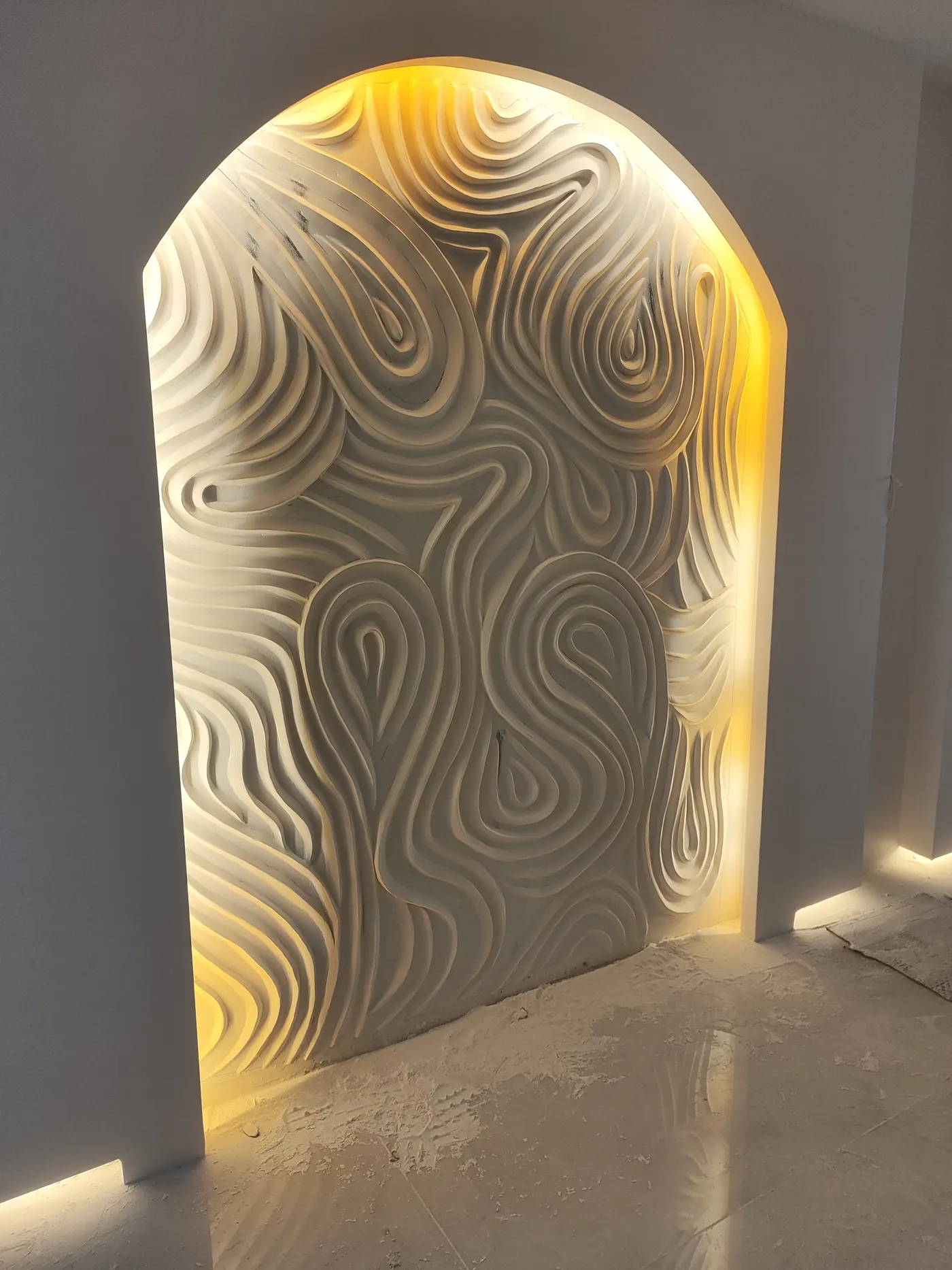
Off-the-shelf decorative panels repeat the same pattern in every home they go into. A custom relief starts from the opposite direction: one wall, one room, one set of people who will live with it every day.
A wall made for one room
Before anything is drawn, we look at how the wall is seen. Is it at the end of a corridor, facing the front door, or beside a window? Where does the light come from in the morning and at night? These answers decide the size of the piece, how deep the carving should go and which direction the forms should move.
It changes how you move through a room
A relief gives a space a clear focal point. At the end of a long hallway it pulls you forward. In a narrow room, forms that flow horizontally make the wall feel wider. A backlit arch, like the one above, can turn a plain dead end into something that feels like a doorway.
The best compliment is when guests stop talking for a moment as they walk in.
How a commission comes together
- Conversation and site visit. We listen to what you want the room to feel like and measure the wall.
- Sketch and approval. You receive a design proposal to review before any material is used.
- Hand sculpting. The relief is built up and carved by hand, directly on the wall or as panels, depending on the project.
- Finishing and lighting. Surfaces are refined, and the lighting is tested until the shadows fall the way they should.

It lasts
Trends in paint colour and furniture come and go. A relief is part of the building. Done well, it is the one element in a room nobody wants to change during the next renovation.