
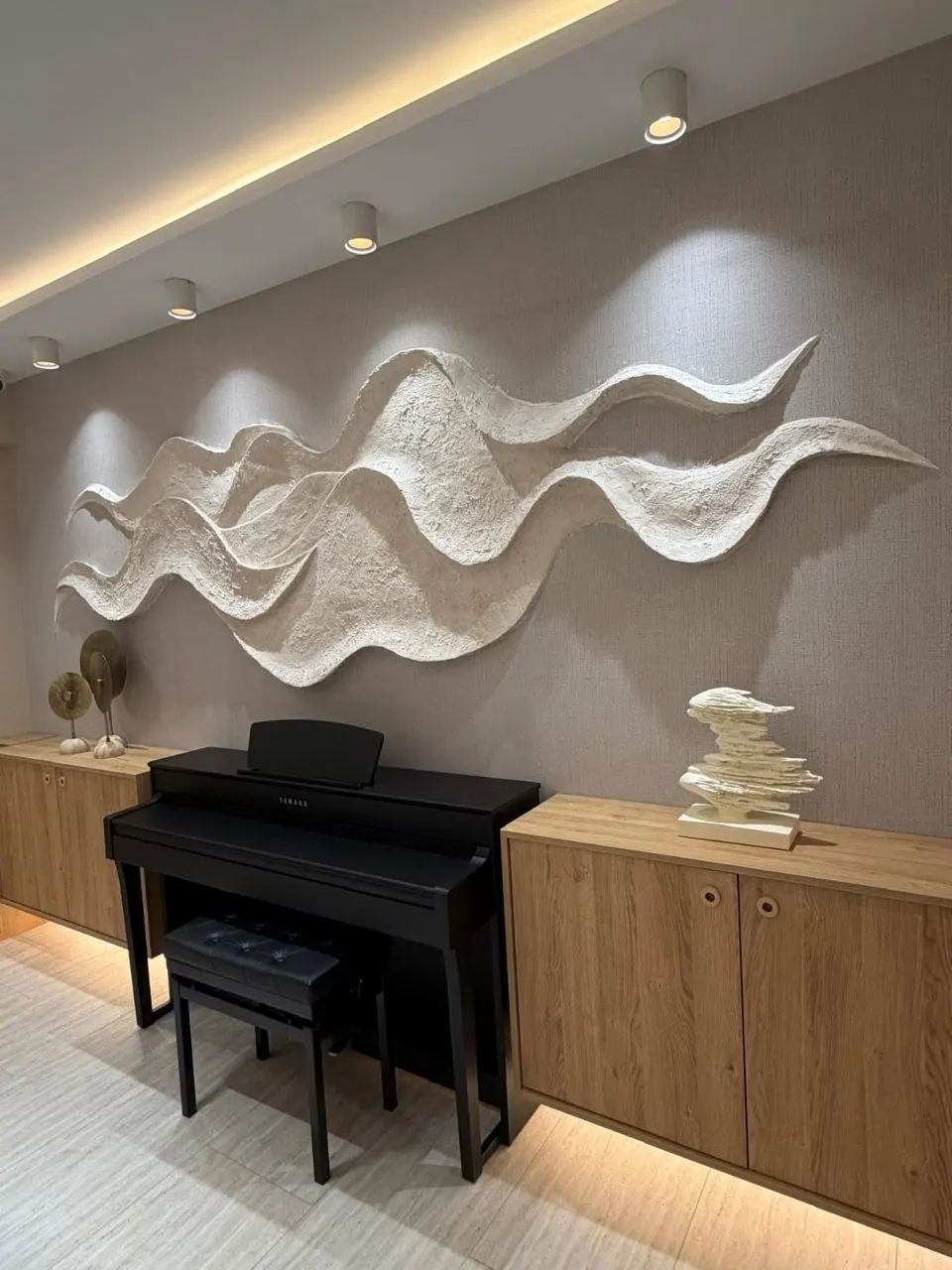
Relief is one of the oldest ways people have decorated walls, from temple friezes to carved stone in Ottoman architecture. What has changed is where it lives today: open-plan living rooms, restaurant dining halls, hotel lobbies and quiet private studies.
Why minimal spaces need depth
Contemporary interiors remove ornament on purpose. Walls are flat, palettes are neutral and storage is hidden. The result is calm, but it can also feel flat. A relief adds depth without adding colour or clutter. Because it is usually the same tone as the wall, it reads as part of the architecture rather than something hung on top of it.
Light does half the work
A relief is never the same twice in a day. Soft daylight lowers the shadows; a concealed LED strip grazing the surface at night makes every curve stand out. That is why we plan the lighting together with the piece, not after it is finished.
A good relief doesn’t hang on the wall. It becomes the wall.

Choosing a motif that feels current
Organic forms such as waves, leaves and flowing lines sit comfortably next to modern furniture. Figurative or architectural scenes, like a city skyline, work best as a single focal wall. Scale matters more than detail: one large, confident piece almost always looks better than several small ones.
Where it works best
The wall behind a sofa or bed, an entrance hall, a dining-room feature wall, a stairwell, or the reception wall of a hotel or clinic. In each case the relief gives the eye somewhere to rest and gives the room a clear centre.
If you are planning a renovation, it is worth thinking about a relief early. Electrical points for lighting and the final wall finish are much easier to prepare before the painters arrive.